Respect as a Foreign Policy
Just like human relationships are built on respect, international relations should be approached the same way.
I know it's still common to buy politicians with money or "aid," especially in poorer countries. But values like respect triumph. Respect isn't just valued more than a material transaction — it's also, in the long run, more sustainable for global security.
Consider Gaza. Many Westerners are baffled that Gazans, despite poverty and the absence of infrastructure, refuse to give up resisting even when offered financial incentives to relocate. Why? Simply because they value their dignity — because it's disrespectful and humiliating to feel like you're being bought with money, let alone having your rights as an indigenous people ignored. The same dynamics play out across political conflicts: respect, or the deliberate withholding of it, becomes a policy tool. This goes for Arabs, Africans, and Asians alike. Respect is highly valued. Talking nice pays off; talking down results in people digging in — even if the deal on the table is a bad one. Respecting people truly rules.
The framework for respect in foreign policy can work in a mix of ways: formal apology, peer recognition, acknowledgment, non-interference, and honor.
Sorry, not sorry
Turkey
In 2013, Netanyahu extended a formal apology to Erdogan in a breakthrough phone call brokered by President Obama during his visit to Israel. Turkey had demanded the apology for years. Netanyahu accepted two of Turkey's three conditions for normalizing the relationship: he apologized for operational mistakes by the Israeli military during the incident and agreed to compensate the victims' families. The crucial point is that Israel had previously expressed regret for the deaths but rejected Turkey's demand for a formal apology, arguing that would be tantamount to admitting moral culpability. That distinction — between expressing regret (no moral responsibility) and apologizing (acknowledging wrong) — was the entire sticking point. No amount of compensation moved things until the symbolic act of respect was made.
Poland
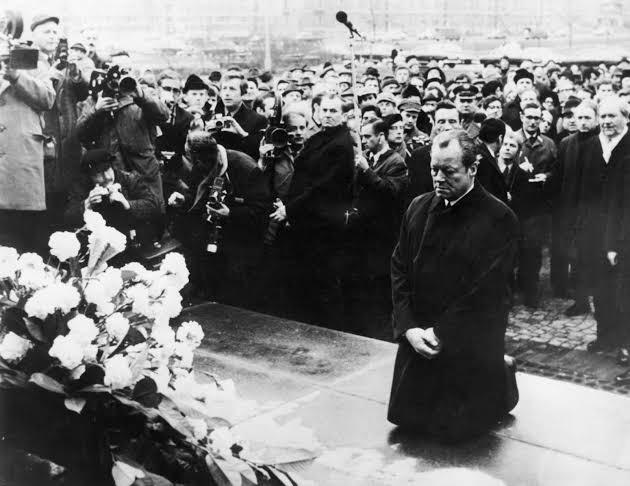
In 1970, German Chancellor Willy Brandt famously fell to his knees after adjusting the wreath ribbons at the Warsaw Ghetto memorial. Germany had the economic weight to offer Poland material compensation without kneeling. The kneeling was what opened the relationship.
Qatar
More recently, Israel attacked Qatar, targeting the negotiating team from the Palestinian side — which sabotaged the deal. True to form, the Arab side refused to keep negotiating out of stubbornness. Only after Israel apologized were negotiations able to resume. Sorry, not sorry.
Africa
Although USAID has been wound down, the US has signed 14 bilateral deals with African countries to advance healthcare programs. In Zambia, negotiations have stalled because Zambia caught on to what the deal really was. Zambia has accused the US of being "mischievous," "disgusting," and "undiplomatic" for offering a $2 billion deal for critical health assistance in exchange for critical minerals. And it gets better: the reason negotiations stalled was not only "the insistence on preferential treatment of U.S. companies over Zambia's critical minerals," but also "unacceptable" data-sharing demands "in violation of our citizens' right to privacy."
The data privacy issue has also been flagged in Ghana and in Kenya, where a court put a $2.5 billion health deal on hold, arguing it violates data protection laws. Let me rephrase: the US is not interested in advancing healthcare in African countries. It wants minerals and people's personal data.
"deeply regrettable, undiplomatic and inconsistent with the spirit of mutual respect." what Zambia's minister of foreign affairs Mulambo Haimbe, had to say about U.S. Ambassador Michael Gonzales
China
In April last year, during US-China trade talks, China came out demanding respect. As Bloomberg reported, "the most important precondition for any talks is that Chinese officials need to know such engagement will be conducted with respect."
Foreign Ministry spokesman Lin Jian called Vice President JD Vance's comments — "we borrow money from Chinese peasants to buy the things those Chinese peasants manufacture; that is not a recipe for economic prosperity" — "surprising and sad ... ignorant and disrespectful."
We are different and here is why
Sometimes I think Western countries have a different understanding of the value systems of other countries (may I say, the rest of the world, aka the majority of the world) — things like respect, trust, sharing, dignity, family. Everything seems quite transactional to them by comparison.
Value systems differ because humans play different games — usually one of two: zero-sum games (lose-win scenarios) or non-zero-sum games (lose-lose or win-win scenarios).
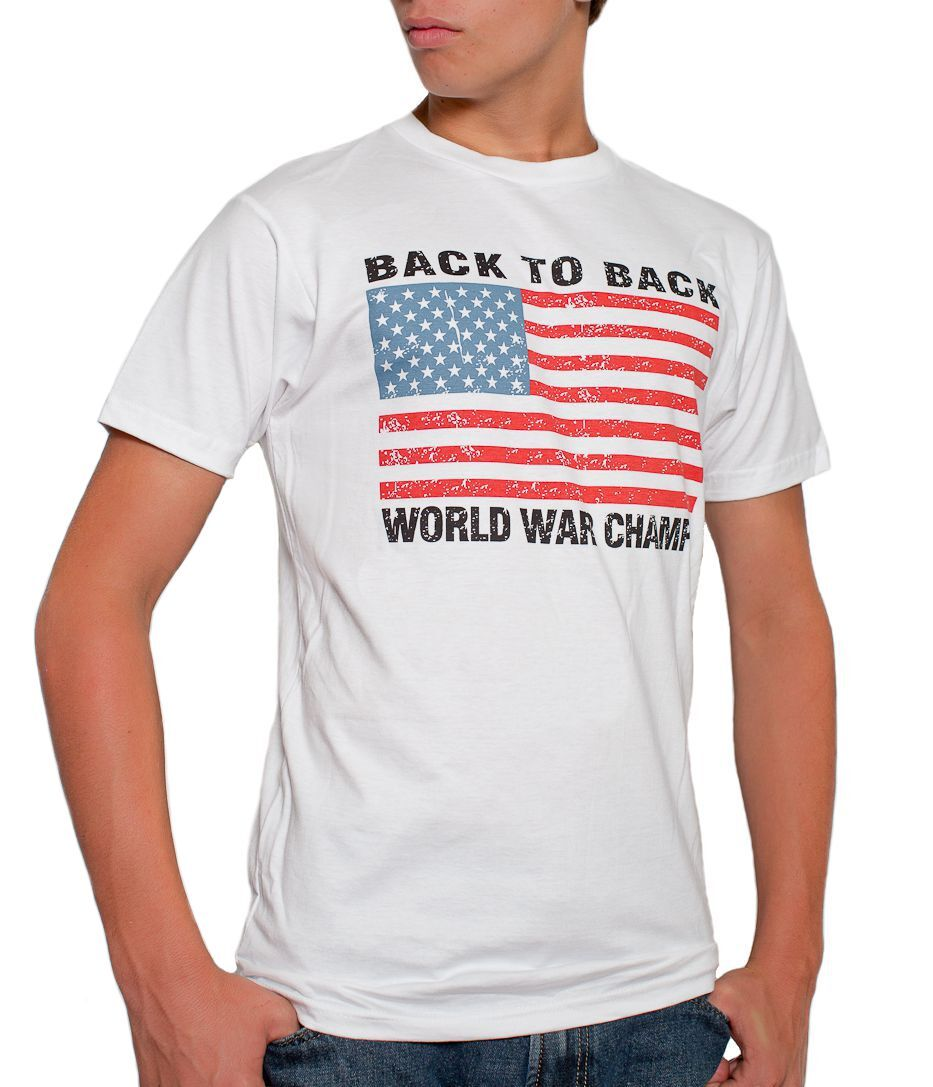
Obviously, we know the American game: back-to-back World War champs. The going theory is that ancestral resource scarcity made zero-sum pattern-matching a cognitive default, as opposed to other, historically richer civilizations elsewhere, where value systems evolved from winning toward sharing — sharing of risk, sharing of responsibility, sharing of loss, and sharing of wins.
The idea that everything can be bought works, up to a point — but it doesn't build meaningful trust, and it doesn't solve problems for good.
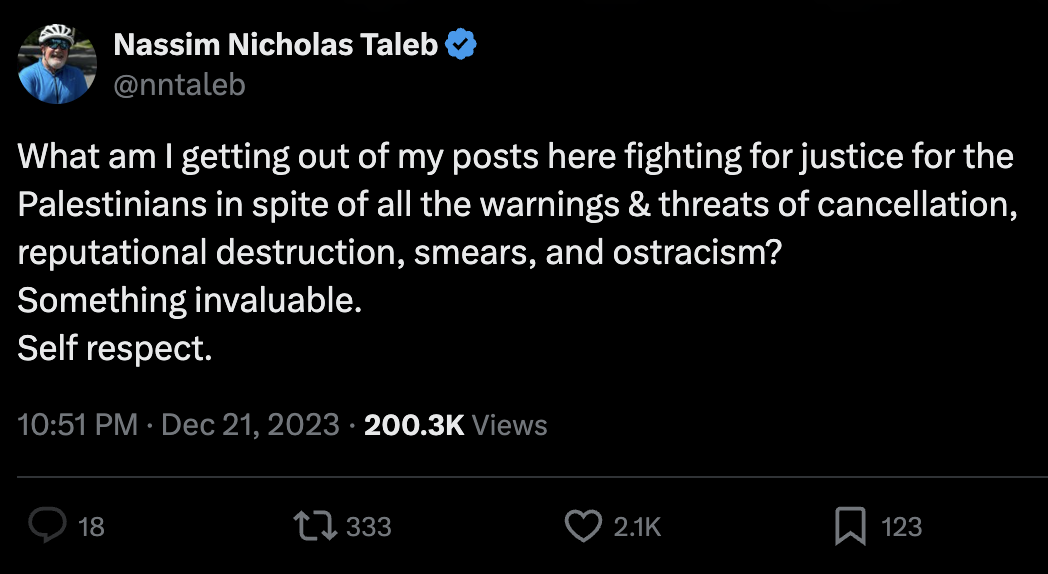
Nassim Taleb faced a huge smear campaign for speaking out on the Palestinian cause. In a tweet, he once explained why he keeps doing it: self-respect.